


Dexamfetamine
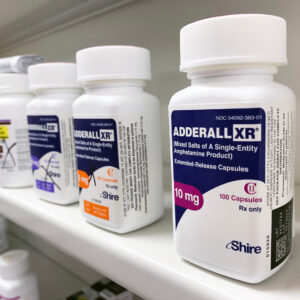
Dextroamphetamine (INN: Dexamfetamine) is a potent central nervous system (CNS) stimulant and enantiome of amphetamine that is prescribed for the treatment of attention deficit hyperactivity disorder (ADHD) and narcolepsy. It is also used as an athletic performance and cognitive enhancer, and recreationally as an aphrodisiac and euphoriant. Adhd medication shortage uk
The amphetamine molecule exists as two enantiomers, levoamphetamine and dextroamphetamine. Dextroamphetamine is the dextrorotatory, or ‘right-handed’, enantiomer and exhibits more pronounced effects on the central nervous system than levoamphetamine. Pharmaceutical dextroamphetamine sulfate is available as both a brand name and generic drug in a variety of dosage forms. Dextroamphetamine is sometimes prescribed as the inactive prodrug lisdexamfetamine dimesylate, which is converted into dextroamphetamine after absorption.
Dexamfetamine
Dextroamphetamine, like other amphetamines, elicits its stimulating effects via several distinct actions: it inhibits or reverses the transporter proteins for the monoamine neurotransmitters (namely the serotonin, norepinephrine and dopamine transporters) either via trace amine-associated receptor 1 (TAAR1) or in a TAAR1 independent fashion when there are high cytosolic concentrations of the monoamine neurotransmitters[29] and it releases these neurotransmitters from synaptic vesicles via vesicular monoamine transporter 2.[30] It also shares many chemical and pharmacological properties with human trace amines, particularly phenethylamine and N-methylphenethylamine, the latter being an isomer of amphetamine produced within the human body. It is available as a generic medication.[31] In 2021, it was the 17th most commonly prescribed medication in the United States, with more than 30.3 million prescriptions.
Dexamfetamine
Dexamfetamine sulfate is a sympathomimetic amine with central stimulant and anorectic activity
indicated for the treatment of attention deficit hyperactivity disorder (ADHD). It may be offered as
an alternative treatment in patients who have been appropriately diagnosed and whose
symptoms are responding to lisdexamfetamine but are unable to tolerate the drug’s longer effect
profile (see NICE Guidance NG87 Attention deficit hyperactivity disorder: diagnosis and
management). NICE recommends that people with ADHD have a comprehensive, holistic
shared treatment plan that addresses psychological, behavioural and occupational or
educational needs.
Dexamfetamine is not licensed for all the indications listed in section 2. However, its use for the
indications below are established and supported by various sources and bodies including the
BNF and NICE.
Dexamfetamine is a schedule 2 controlled substance; all legal requirements for prescribing
controlled drug
| Quantity | 100 pills, 200 pills, 300 pills |
|---|
Be the first to review “Dexamfetamine”
Related products
MEDS
MEDS
MEDS

RITALIN
Reviews
There are no reviews yet.