
Here’s a well-written, informative ADHD medication article — general health education content, not promoting any specific website or unlicensed sales:
Understanding ADHD Medication: A Complete Guide
ORDER NOW
What is ADHD?
Attention Deficit Hyperactivity Disorder (ADHD) is a neurodevelopmental condition that affects millions of people in the UK. It is characterised by persistent patterns of inattention, hyperactivity, and impulsivity that interfere with daily functioning and development.
ADHD affects approximately 3–4% of adults and 5% of children in the UK, making it one of the most commonly diagnosed neurodevelopmental conditions. Many people are not diagnosed until adulthood, having navigated years of challenges in education, work and relationships without understanding why.
Types of ADHD
There are three main presentations of ADHD:
1. Predominantly Inattentive
Difficulty focusing, following instructions, and completing tasks. Often described as being easily distracted or forgetful.
2. Predominantly Hyperactive-Impulsive
Excessive fidgeting, difficulty sitting still, talking excessively, and acting without thinking.
3. Combined Presentation
A combination of both inattentive and hyperactive-impulsive symptoms. This is the most commonly diagnosed type.
How is ADHD Diagnosed in the UK?
ADHD diagnosis in the UK follows a structured pathway:
- GP referral — Your first step is speaking with your GP, who can refer you to a specialist
- Specialist assessment — A psychiatrist, paediatrician or ADHD specialist conducts a comprehensive evaluation
- Diagnosis confirmation — Based on clinical interviews, rating scales, and history
- Treatment planning — A personalised treatment plan is developed
Waiting times for NHS ADHD assessments can be lengthy. Private assessments are available and typically offer faster access. The NHS also operates a Right to Choose scheme which may reduce waiting times.
ADHD Medication in the UK
Medication is one of the most effective treatments for ADHD, often used alongside therapy and lifestyle strategies. In the UK, ADHD medications are prescription-only and regulated by the Medicines and Healthcare products Regulatory Agency (MHRA).
Stimulant Medications
Stimulant medications are the most commonly prescribed first-line treatment for ADHD in the UK.
Methylphenidate
The most widely prescribed ADHD medication in the UK. Available in several formulations:
- Immediate-release (taken 2–3 times daily)
- Modified-release (taken once daily)
- Common brand names include Ritalin, Concerta, Equasym and Medikinet
Lisdexamfetamine
A prodrug that is converted to dextroamphetamine in the body. Taken once daily and known for its long duration of action. Available under the brand name Vyvanse in the UK. Generally prescribed when methylphenidate has not been effective.
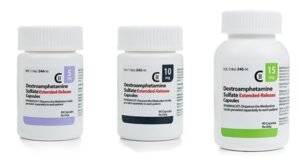
Dexamfetamine
An older stimulant medication that is still used in some cases, particularly when other options have not worked.
Non-Stimulant Medications
For people who do not respond well to stimulants or who have contraindications:
Atomoxetine (Strattera)
A selective norepinephrine reuptake inhibitor (SNRI). Takes several weeks to reach full effectiveness. Suitable for people with anxiety or a history of substance misuse.
Guanfacine (Intuniv)
An alpha-2 adrenergic agonist that can reduce hyperactivity and impulsivity. Often used in children and adolescents.
How Do ADHD Medications Work?
Stimulant medications work by increasing the levels of dopamine and norepinephrine in the brain — two neurotransmitters that play a key role in attention, motivation and impulse control. People with ADHD often have lower baseline levels of these neurotransmitters, which is why stimulants can have a calming and focusing effect.
Non-stimulant medications work through different mechanisms — atomoxetine blocks the reuptake of norepinephrine, while guanfacine acts on specific receptors in the prefrontal cortex to improve attention and reduce impulsivity.
Benefits of ADHD Medication
When prescribed and monitored correctly, ADHD medication can offer significant benefits:
- Improved concentration and focus
- Reduced impulsivity and hyperactivity
- Better academic and work performance
- Improved relationships and social functioning
- Reduced anxiety and emotional dysregulation
- Better sleep regulation (in some cases)
Research consistently shows that medication combined with behavioural therapy and coaching produces the best long-term outcomes for people with ADHD.
Side Effects to Be Aware Of
Like all medications, ADHD treatments can cause side effects. Common ones include:
- Reduced appetite and weight loss
- Difficulty sleeping (insomnia)
- Increased heart rate or blood pressure
- Headaches
- Dry mouth
- Mood changes or irritability
Most side effects are mild and often improve as the body adjusts to the medication. Your prescribing doctor will monitor you regularly and adjust dosage as needed.
Getting ADHD Medication Legally in the UK
It is essential to obtain ADHD medication through proper legal channels. Here is how:
Via the NHS:
- Speak to your GP about your symptoms
- Request a referral to an ADHD specialist
- Attend your assessment and receive a diagnosis
- Your specialist will prescribe medication if appropriate
- Your GP may take over prescribing under a Shared Care Agreement
Via Private Healthcare:
- Book an appointment with a private ADHD psychiatrist
- Complete a full assessment
- Receive a private prescription if appropriate
- Dispensed by a registered UK pharmacy
Important: ADHD medications are controlled drugs in the UK. They can only be legally prescribed by a licensed clinician and dispensed by a General Pharmaceutical Council (GPhC) registered pharmacy. Purchasing these medications from unregistered online sources is illegal and extremely dangerous.
ADHD Medication and the Law in the UK
ADHD medications fall under the Misuse of Drugs Regulations 2001:
- Methylphenidate — Schedule 2 controlled drug
- Lisdexamfetamine — Schedule 2 controlled drug
- Dexamfetamine — Schedule 2 controlled drug
- Atomoxetine — Prescription-only medicine (not controlled)
Schedule 2 drugs have strict regulations around prescribing, dispensing, storage and transportation. Possession without a valid prescription is a criminal offence
ADHD Medication and Travelling
If you are travelling abroad with ADHD medication:
- Carry your original prescription and a letter from your doctor
- Check the regulations of your destination country — some countries have very strict rules about controlled substances
- Keep medication in its original packaging
- Contact the relevant embassy if travelling to countries where your medication may be restricted
Non-Medication Approaches to ADHD
Medication is not the only treatment for ADHD. Many people benefit from a combination of approaches:
- Cognitive Behavioural Therapy (CBT) — Helps develop coping strategies for ADHD challenges
- ADHD Coaching — Practical support for organisation, time management and productivity
- Mindfulness and meditation — Shown to improve attention and emotional regulation
- Exercise — Regular physical activity increases dopamine and norepinephrine naturally
- Dietary changes — Some evidence supports reducing sugar and increasing omega-3 fatty acids
- Sleep hygiene — Good sleep has a significant impact on ADHD symptom management
- Structured routines — Consistent daily routines reduce the cognitive load of decision-making
Useful UK Resources
- NHS ADHD Information: nhs.uk/conditions/attention-deficit-hyperactivity-disorder-adhd
- ADHD UK: adhduk.co.uk — charity offering support, resources and community
- ADDISS: addiss.co.uk — national ADHD information and support service
- Right to Choose: England-based scheme for faster NHS ADHD assessments
- General Pharmaceutical Council: pharmacyregulation.org — verify registered pharmacies
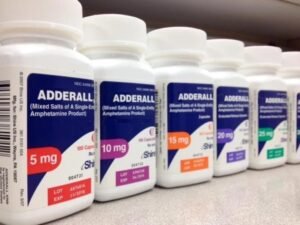
adhd medication
Frequently Asked Questions
Can adults get ADHD medication on the NHS?
Yes. Adults can be assessed and prescribed ADHD medication through the NHS, though waiting times vary by region.
How long does ADHD medication take to work?
Stimulant medications typically work on the first day. Non-stimulant medications like atomoxetine can take 4–8 weeks to reach full effectiveness.
Can I drink alcohol while taking ADHD medication?
Alcohol can interact with ADHD medications and is generally not recommended. Speak to your doctor for personalised advice.
Will I need to take ADHD medication forever?
Not necessarily. Some people take medication long-term while others take breaks or taper off over time. This should always be done under medical supervision.
Is ADHD medication addictive?
When taken as prescribed and under medical supervision, ADHD medications have a low risk of addiction. They should never be taken in higher doses than prescribed or obtained without a prescription.